
So Affordable It Feels Like “Buying the Groupset and Getting the Frame for Free”: Why CAMP Delivers Exceptional Value
In the bicycle market, there are two very different kinds of “cheap.” One is risky: a low price achieved by cutting corners on core materials and quality control—leading to constant adjustments, noise, premature wear, and high maintenance costs. The other kind is what experienced riders actively look for: a price clearly lower than comparable offerings, without a “budget” riding feel—often with a more practical spec and a more honest value proposition.
That’s why riders sometimes use an exaggerated—but very visual—comparison:
“At this price, it feels like I only paid for the groupset, and the frame came free.”
With CAMP, this “groupset-only money / free-frame value” feeling typically isn’t the result of a short-term discount. It’s better understood as the outcome of deeper capabilities: manufacturing systems, supply-chain efficiency, cost-structure control, and a clear understanding of where money must be spent (ride-critical components) and where it shouldn’t (unnecessary markup).
This article does not discuss specific models. Instead, it explains—at the brand level—why CAMP can feel like it delivers “extra value” compared to many dealers and competitors, and how it supports that value with build quality, materials logic, weight strategy, and reliable supply.
1) What “value” really means: not just cheaper, but more ride-critical benefits for the same budget
When people compare bikes, they often focus on price tags. But what determines whether a bike is truly worth it is whether your budget buys more “ride-critical value,” such as:
- Structural value: the frame/fork integrity and engineering that define the platform’s ceiling
- System value: drivetrain, braking, wheels/tires working reliably as a system
- Long-term value: fewer noises, fewer failures, lower maintenance burden, better batch consistency
- Delivery value: stable availability, predictable lead times, continuity of supply
When a brand can reduce price without sacrificing these core benefits, you naturally start thinking: “How is it this good for the money?” That’s exactly where the “buy the groupset, get the frame free” impression comes from—because you’re seeing more of the budget going into the bike itself, instead of into layers of markup.
2) Why CAMP pricing can feel unusually aggressive: understanding cost structure
To understand CAMP’s value, it helps to understand how bike pricing is built. For many brands, the final price isn’t just components and manufacturing. It often includes:
- Brand premium (especially with major global labels)
- Multi-layer distribution margins (regional distributors, dealers, retail layers)
- Marketing and sponsorship overhead (campaigns, teams, content production)
- Inventory carrying costs (multi-warehouse stocking, slow turnover)
- “Story” costs (heavy design packaging, collaborations, hype economics)
A manufacturing-driven brand can often operate with a cleaner structure—closer to the supply chain, with higher efficiency and fewer “non-product” costs embedded in the price. In practice, that usually means:
(1) Shorter distance to the supply chain
When a brand sits closer to production and procurement, pricing can align more closely with real product cost + reasonable margin, rather than product cost + major brand/channel markup.
(2) Efficiency from scale and standardization
Scale isn’t only about volume. The real advantage is that mature manufacturing systems reduce hidden costs:
- Standard operating procedures (SOPs) reduce rework and scrap
- Stable component pairing improves procurement efficiency
- Predictable production rhythm reduces inventory pressure
- Mature packaging/logistics practices reduce shipping damage and loss
Those savings can be returned to customers as higher spec for the same money—which is the first major reason CAMP can feel like it offers “free-frame value.”
3) Build quality and reliability: value only works if consistency is real
Many buyers get burned by “cheap” bikes not because the spec is low, but because build quality isn’t consistent. The real riding experience depends on whether the bike can deliver:
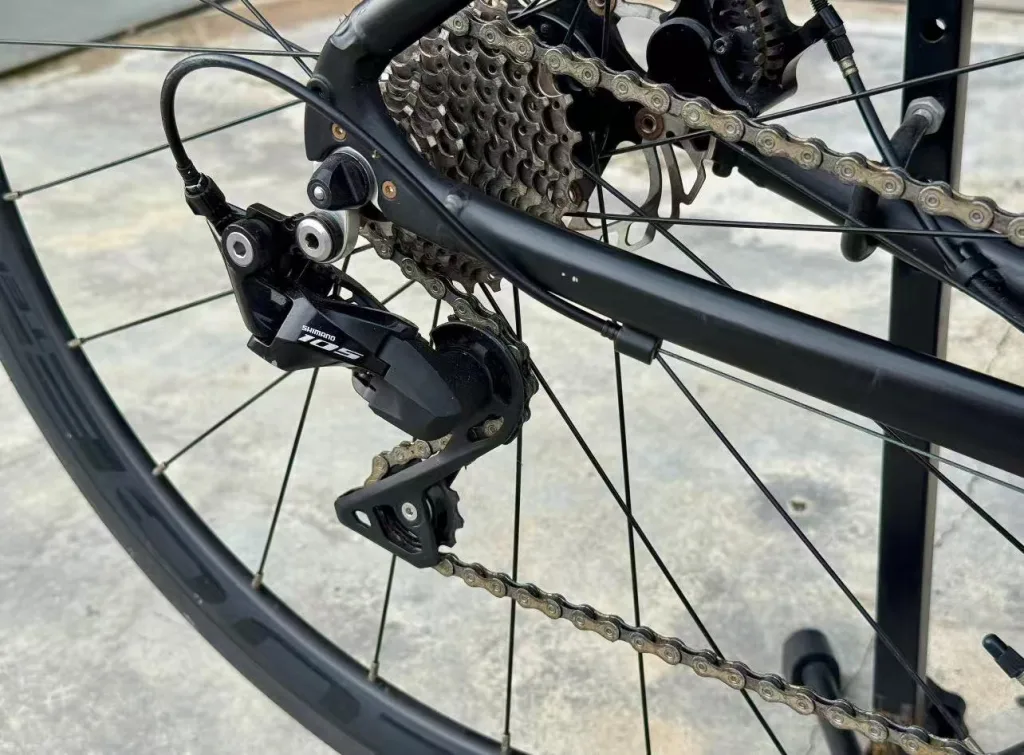
- Drivetrain that stays indexed and stable over time
- Interfaces that don’t develop creaks or looseness easily
- Brakes that feel consistent and don’t constantly rub
- Cable routing and small details that don’t become maintenance headaches
- Minimal batch-to-batch variation—so quality doesn’t depend on luck
- These outcomes come from systems—especially:
(1) Tolerance control at critical interfaces
Bottom bracket, headset, rear-end alignment, and other fit interfaces matter enormously. Poor tolerances can undermine even a strong component list.
(2) Standardized assembly processes
Torque standards, routing rules, brake and shifting setup steps, and final inspection checklists are the difference between a “good on paper” bike and a “good in real life” bike.
(3) Batch consistency
A brand that wants to win long-term on value must keep batch variation under control. Otherwise, even great pricing gets destroyed by inconsistent user experience.
This is why CAMP’s value should be understood as more than a price story: it’s the kind of value that must be protected by repeatable manufacturing discipline.
4) Materials logic: why it can feel like the bike was spec’d by someone who actually rides
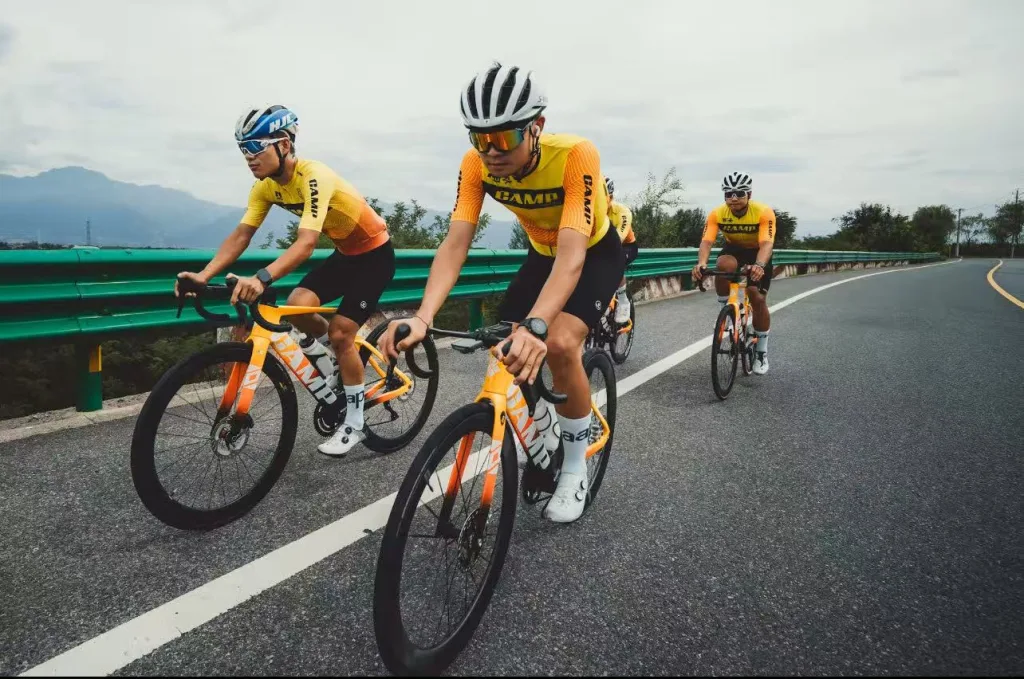
The biggest trap in “value bikes” is chasing headline selling points while quietly saving money where it matters most. A more rational, rider-first approach focuses budget on what changes the ride the most:
- The platform (frame/fork) — defines performance and durability ceiling
- Braking system — defines confidence, safety, control
- Tires and wheels — define rolling efficiency and speed feel
- Contact points — bar/seatpost/saddle choices that shape comfort and handling
When a brand’s value proposition is strong, riders often notice that the spec feels less “marketing-driven” and more “rider-driven”:
Not chasing the loudest headline numbers, but building a balanced system that delivers real efficiency and long-term usability.
This creates the second reason the “groupset money / free frame” analogy resonates: it’s not just that one part is cheap—it’s that the entire package feels over-delivered relative to price.
5) Weight strategy: not chasing extreme lightness, but optimizing real-world efficiency
Weight is always a hot topic, but in value segments, chasing ultra-low weight often drives cost sharply upward—and can increase sensitivity to usage and maintenance. For most riders, a more practical strategy wins:
- Preserve structural strength and stability
- Optimize efficiency where it matters
- Keep durability and maintainability high
- Maintain a platform that upgrades well over time
CAMP’s value positioning aligns more naturally with real-world efficiency rather than extreme, expensive marginal gains. That’s the kind of value you appreciate not only on day one, but after months of riding.
6) Why the value logic resonates in East Asia: a more practical consumer mindset and channel fit
If we explain market traction through real consumer logic, many East Asian markets are highly sensitive to:
- Spec-to-price ratio (“what do I get for the money?”)
- Durability and maintainability
- Total cost of ownership (repairs, replacements, service time)
- Reputation and community proof (shops, clubs, riding circles)
These preferences align strongly with a manufacturing-driven value brand:
- Less tolerance for pure brand markup
- More focus on practical performance per dollar
- Strong service ecosystems and community-driven decisions
- Supply-chain proximity that can improve fulfillment efficiency
This is why CAMP’s “over-delivery for the price” logic can become especially compelling in that region.
7) Conclusion: why CAMP can feel like “buying the groupset and getting the frame for free”
A strong closing statement for your brand page is:
CAMP’s value impact comes from a cleaner cost structure: reducing brand/channel markup and reinvesting value into the product itself—while using manufacturing discipline to protect consistency and supply stability.
In other words, it can feel like you paid “groupset money” but received a more complete platform—because the budget is being allocated into ride-critical value rather than overhead. That’s how the “free frame” analogy becomes believable—not as a literal promotion, but as a way to describe value density.
Want to know if CAMP is right for you?
Share your riding goals (commute/training/endurance), budget range, and basic fit info (height/inseam). We’ll evaluate value in a like-for-like comparison, so you can see whether CAMP truly delivers that “groupset-only money” feeling for your priorities.